Meet the Chaiman
The Harris County Senate District 4 (SD4) is an operational component of the Harris County Republican Party, chartered to conceive, establish, and conduct Get Out The Vote (GOTV) activities in support of the Harris County (and by extension - Texas) Republican Party
Leading the Charge is:
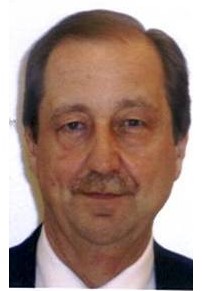
Chairman, Senate District 4, and Precinct 1214
Hon. Steven Watson, MBA-PM
A Viet Nam Veteran and “Make Things Happen” MBA-PM / BSEE Senior Program Director and Covert Operative experienced with the Central Intelligence Agency (CIA - Retired), National Reconnaissance Office (NRO), Naval Research Labs (NRL), National Aeronautics and Space Administration (NASA), and the Aerospace Industry with specific expertise in Intelligence, Space Systems Technology, Research, Development and Engineering.
Contact Steve Watson, swatson@hcsd4.org, 281-389-7567
|
MAN ON A |
|
|
|
By C. A. Kennedy |
|
|
If you held the
knowledge that a revolutionary new technology
was capable of enhancing the quality of life for
everyone on the planet…if you had an absolute
conviction that you were looking down the
timeline into the inevitable future…what would
you do?
As the theme of his upcoming "NANOTECH 2002"
conference indicates, Steve R. Watson is a man
"At the Edge of Revolution." A man who is
convinced nanotechnology has the almost
limitless capacity to literally transform and
improve life on this planet. He is riding the
rising tide of the nanotech revolution, and his
mission is to empower the rest of us to
comprehend his vision and its inherent
possibilities.
Watson's answer to the challenge was to
establish The Center for NanoSpace Technologies,
Inc., of which he is CEO and co-founder. The
Center, along with the American Institute of
Aeronautics and Astronautics, is hosting
Watson's fourth conference in September to
foster the dissemination of knowledge and the
promotion of research and development in this
emerging technology. "Papers will be presented
that identify the challenges and issues
associated with the application of micro/nano
technologies in these topical areas: Aerospace,
Energy, Life Sciences and Transportation.
As an electronics engineer and program director
with the CIA and NASA, Watson was deeply
involved in the development of devices employing
nanoscience which were years, if not a full
decade, ahead of others engaged in the world's
research and development competition.
"I knew…I could tell." Watson said the
tremendous possibilities intrinsic to this odd
and exciting new science, which was operating on
an infinitely small scale and expanding the
limits of scientific knowledge, were explicitly
clear to him. With an engineering background and
as a CIA alumnus, Watson is not given to inexact
hyperbole, and would certainly deny experiencing
a blinding flash of insight about this newly
emerging technology.
When did the revelation dawn, then? Although
he had known of work in the field, it was not
until he was working on a classified aerospace
project in 1989, that "I saw what was being done
in the lab to decrease the size and weight of
the devices, and it was amazing. I would drop by
the labs and see what was being worked on. The
research scientists were solely focused on the
immediate task, but I said, `Wait a minute!' I
saw the possibilities and potentialities. Not
many would listen to me, even the scientists
involved, but I knew I was looking at the
future."
In retrospect, it would seem that Watson's
entire life experiences have contrived to
prepare him for his chosen mission. Born in
A gifted athlete, he excelled in many sports,
playing on the football team at
From the Air Force he moved on as a civilian to
NASA and arc-jet/vacuum chamber testing of the
Space Shuttle heat shield, Watson said,
outlining a brief bio run-through. From NASA, he
joined the Central Intelligence Agency (CIA)
with the title of Technical Operations Officer
and became the Operations Manager/Operative. As
Watson's resume explains, that meant: "…the
deployment of intelligence collection devices
into hostile environments abroad, during which
decision-making and "hands-on" expertise were
key elements. Both of which were typically under
pressure and time critical, requiring astute
judgment to ensure operation, as well as
personal, security and effectiveness." (You are
invited to read between the lines.)
While having his hair trimmed one day he fell
into conversation, and then into love, with the
lady with the scissors. They were wed in 1975
and embarked on a peripatetic marriage and a
multiplicity of moves dictated by Watson's
assignments. "I left
Along the way, (one wonders when there was
time) Watson picked up several degrees in
Science and Engineering, focusing on
Electronics. After eight years, and assignments
in more than 80 countries in
As Program Manager, Watson then moved into
the CIA STARFEEL (Steerable Array Feed
Electronics) space program centered on .25
micron Monolithic Microwave Integrated Circuit
(MMIC). "This was the first significant use of
.25 micron technology…it was years ahead of its
industry applications." Watson was responsible
for everything in the $50 million dollar project
from design to manufacture to operational
readiness.
The next step was directorship of the CIA's
multi-million dollar Space Systems Group,
designated NRO/SIGINT Research and Development.
NRO is the National Reconnaissance Office, which
designs, builds and operates the nation's
reconnaissance satellites. "The Quantum Program
for nanotechnology was funded at about $10
million from `93 to '96." Watson commented.
"They probably made more progress in
nanotechnology in those three years than all the
years preceding…13 patents in the first year."
All classified beyond belief, of course, but
Watson could say that he was involved with
commercial technical markets in nano-electronics
technology to exploit revolutionary development
processes including Nano-Satellites, terra-bit
memory, re-configurable logic, and more.
Retirement in 1996 led to a stint with the
Naval Research Laboratories as a senior
Advisor/Consultant for the CIA during which time
Watson said he was a "catalyst for the entrance
of the NRL into the nanotechnology arena." Then
back to NASA at the
By 1998, Watson and his associates
chartered the non-profit, The Center for
NanoSpace Technologies, Inc.,
(www.nanospace.org) to "conceive, establish, and
conduct cutting edge technology research and
development. These technologies are then infused
into the Aerospace, Education, Energy, Life
Sciences and Shipping and Transportation
industries."
Now in the year 2002, Watson's life style could
be an advertisement for the contented government
service retiree. Home is on
As idyllic as it sounds, Watson says he works as
hard now as he ever has in his life, for his
commitment to nanotechnology is an imperative
that demands his constant attention and efforts.
In conjunction with his efforts to bring
nanoscience to popular consciousness is the
second arm of his mission: To seed a nano
industry in
"It's going to happen. The train has left the
station. We are living in a technical society.
Technology got us through the 20th century.
Now we are approaching a brick wall in terms of
production capabilities as downsizing of
technology, such as MEMS (microelectromechanical
systems), reaches the limits of what can be
manufactured. There has to be a whole new
approach and that new approach is
nanotechnology. It is the next Industrial
Revolution, and you better follow or get out of
the way."
In times of changing technologies, Watson
notes, power changes hands. Some large companies
will fall and some small ones will rise. Those
with their heads in the sand and who do not
realize the potentials of nanotechnology will
not prosper. Watson is adamant that
Sliding his coffee cup aside on the table and
leaning forward, Watson emphasized, "People
need to know about nanoscience. Teens know
more than adults, having absorbed it through
science fiction and having a scientific
openness." It is Watson's belief that
foreknowledge is being forearmed, and that an
informed public awareness will contribute to our
ability to make wiser decisions when we face the
myriad forms nanotechnology will assume.
At nanosize, "our understanding of the laws of
physics changes." He defined nanoscience as pure
research and technical development of devices in
the sub-micron scale…a 10th of a micron or
smaller… or "itty bitty," he said with a grin,
"It's a size thing," he added.
" The life sciences will be one of the major
benefactors. Check the programs at
Asked for an example of an immediate "for
instance," Watson gestured with his hands and
arms, outlining a huge orb; and then he swung
his hands together to cup an imaginary
eight-inch circle. "A satellite that weighs
5,000 pounds could be downsized to the size of a
grapefruit, or less, and do the same job."
Imagine what that would mean to the astronauts
who now have to manhandle unwieldy orbiters to
deploy them from the space shuttle. It would cut
the risk factor significantly."
One area that could be vastly improved is the
manned space system…especially the extra
vehicular activities or "space walks," he said.
Astronauts are presently encased in suits that
weigh 250 pounds. New lightweight
nanotechnology-engineered suits could be custom
tailored to each astronaut's needs, and
particular size and shape, he said. Having been
intimately involved in space suit design, Watson
was particularly sympathetic to female
astronauts whose comfort could be radically
improved. "Beneath the suit the astronauts
essentially wear long johns, and yards of water
hoses encircle their bodies to cool them;
transceivers are the size of bread boxes."
Nanotechnology could not only provide more ease
and comfort, but would significantly increase
the ability to perform tasks in space, he
pointed out.
Small cameras are now being swallowed by
patients, which enables physicians to gaze upon
interior areas hitherto unseen by the human eye,
but Watson predicts vast improvements are in the
offing. " Electronics the size of a vitamin, but
far superior to those in use today in
biomedicals will be carrying different types of
sensors…some that can detect cancer and
chemicals that will treat on the spot. Not just
cameras, which are limited to surface
observations but also infrared. We will have
smaller, smarter devices that will detect,
analyze, and report," he
emphasized.
"And that is only half of the equation.
Imagine being able to heal at the molecular
level, to fix the problem…close the loop…at the
molecular level using remote or autonomous
devices, Watson said. The Center for NanoSpace
Technologies website at http://www.nanospace.org
offers a wide array of advances headed our way,
to wit: Wearable stamp-size health monitors,
patch-sized transmitters, peel-n-stick
omnipresent detectors, implantable or wearable
microscopic diagnostic hardware, restorative
hearing aid patch, implantable neuro-controls,
and limb prosthetics.
And Watson can envision nanotechnology-enhanced
virtual reality applications in the medical
field where virtual reality is now used in
treatment in areas such as clinical diagnosis
and physical rehabilitation, the alleviation of
chronic pain, post-traumatic disorders, phobias,
autism and brain injuries, to list a few.
"Technology is really fast paced. What is
developed today will be out (on the market) next
week. What I was working with in `89 was not
open to public awareness until maybe `95 or `96.
The market has been slowed by the need to make
a profit." Watson hopes to speed the process.
"I have a plan for a 100,000 square foot center
- a foundation for nano - like
The people who take the research and develop
uses for it speak a different language than the
people in business, those with the venture
capital, and I want to get them together to talk
to each other. That is where NanoTech 2002 will
do an excellent job. We need to throw these
people in the same room at the same time. VCs
need to see the projects…specific science
projects that are being worked on…and the
scientists need to be there to demonstrate and
explain."
Watson's understanding of the concepts and the potentials of nanoscience
is so vast that he consciously limits his
interests to a relatively few projects. Within
the span of a few minutes he mentioned subjects
ready for development ranging from space jaunts
to corn fields, from bomb detection to cancer
detection, from animal husbandry to keeping
children safe.
His consuming life's work is to bring
nanotechnology "from concept to reality, from
fiction to fact," as he says. He counts more
than 30 engineered studies, bound and waiting on
his shelves for cognition to spark in some
venture capitalist's or entrepreneur's awareness
that these products will produce profitable
returns, and that most have the capacity to
benefit mankind.
"The Center is non-profit. We take a
nano-related idea in any emerging technology and
pursue that idea up through Proof of Concept…and
then we give it away. We license it and collect
a small royalty, which is a residual for income
to turn back into developing more concepts."
Take the `Sniffer," he said. A device a
million times more sensitive than a search dog's
nose, that can detect the a bomb by singling out
molecules on the order of a few parts per
trillion without going near the explosives, or
locate persons trapped under buildings.
Rhetorically, Watson asked how many lives could
be saved and lethal bombs detected if the
Sniffer was operational now.
Another tiny device could identify a child's
location at all times using a Global
Positioning System. "It would keep your child
safe, and why not extend the technology to our
pets? Canine collars can be punched out like
cookies and animals could be tracked. That
would keep handlers safe, for dogs can go where
people can't venture in search and rescue
missions. Ninety-nine percent of the projects
will benefit people. I would like to see nano
help save lives."
Another concept awaiting development is a
hand-held detector approximately the size of a
cigarette pack which is capable of zeroing in on
viruses. Noting that twenty percent of all crop
losses are caused by viruses, Watson explained
how farmers inspect their fields. If they spy a
suspicious plant, they pluck it, mail it to the
lab along with $50 to $75, and then wait up to
two weeks for an analysis while the unknown
virus culprit goes on a spree. With the device
a farmer could stroll through his fields
checking the cornrows for all known corn
viruses even before the plant wilts and treat
the problem immediately.
"This is Phase One, the diagnosing of plants,"
Watson said.
Phase Two is doing the same thing for animals
such as poultry and livestock. Treating only the
ill animals could reduce the blanket use of
antibiotics.
Phase Three is the extension of the technology to humans, resulting in
the saving of lives, medicines, time and money.
"The concept is sitting on a shelf…and that is
frustrating, he said. "It is difficult to find a
problem that cannot be solved by nanotechnology.
The applications are endless - I've probably
given away more ideas in conversation than I'm
working on."
Will the task be too arduous? Too complicated?
Does golf lure him? Leaning back in the chair,
his head tilted a bit to the side, Watson
declared, "I'm not planning on quitting anytime
soon." The "NanoTech 2002" conference and The
Center for NanoSpace Technologies are concrete
proof of his intent. The stakes for society are
too high to walk away from, and the man has a
mission to complete.